
 The Querencia Clara(4R5B)
When to Visit Da Nang with a Baby
 The Querencia Calma(6R6B)
Da Nang has a clear dry season that runs from roughly February through August. During these months, rainfall is low, temperatures are warm and consistent, and humidity stays at a level that most small children handle without difficulty. For families with infants, this window is the most reliable time to plan the trip.
The sweet spot within that window is March through May. Temperatures are warm but not yet at their peak, sea breezes keep the coast comfortable, and the beaches are calm. Mornings are cool enough for a stroller walk before the midday heat sets in - useful when you are working around nap schedules.
June, July, and August - Hot but Manageable
The summer months are the busiest season and the hottest. Heat is real, and you will want to plan outdoor time for early morning or late afternoon. That said, the pool at a private villa becomes the centre of the day, which suits infant routines well - a shaded pool session in the morning, a long indoor nap at midday, and a short outing in the evening.
September to January - Off-Season Advantages
The off-season in Da Nang runs from roughly September through January. October and November carry the highest risk of typhoon-season rain, and extended wet spells can make beach days unpredictable. If your travel dates fall in this window, build flexibility into the itinerary and keep outdoor plans loose.
Outside of October and November, the off-season still delivers more sunny days than not. Villas are quieter, crowds are thinner, and rates are lower - real advantages when you are traveling with an infant who benefits from a calm, unhurried environment. September and December in particular can be very pleasant, with warm temperatures and far fewer tourists at popular spots.
February - May: Best overall window - low rain, manageable heat, calm seas.
June - August: Peak season - hot middays, but private pool time works well for infant routines.
September, December - January: Off-season with good weather on most days, fewer crowds, lower villa rates.
October - November: Highest rain risk - plan with flexibility if traveling during this period.
One practical note: Da Nang's UV index is high year-round. Regardless of the month you travel, shade, a broad-spectrum sunscreen rated for infants, and a UV-protective hat are non-negotiable items for any outdoor time.
 The Querencia Luz(6R6B)
What to Pack - and What You Can Buy in Da Nang
 The Querencia Calma(6R6B)
Packing for a trip with an infant always feels like overpacking - until you arrive somewhere and realize the one thing you forgot is the one thing you need at 2 a.m. This section separates what you genuinely cannot buy in Da Nang from what you can pick up easily once you land.
Bring from home - these are harder to source locally
Specific formula - Da Nang supermarkets carry infant formula, including some international brands, but hypoallergenic or prescription-grade options are not reliably stocked. Bring the full trip's supply plus a few days' buffer.
Portable blackout blind - Villas often have curtains, but a lightweight travel blackout blind that attaches with suction cups gives you control over nap conditions in any room. It takes up almost no space and makes a real difference.
Infant car seat - Private transfer vehicles can be arranged in advance through the villa, but dedicated infant car seats are not always standard in local vehicles. Confirm availability when you book, and if you are particular about the seat, bring a travel-rated one that folds flat.
Swim float or vest rated for your baby's weight - Local shops near the beach sell floats, but sizing for very young infants is inconsistent. Bring one you trust.
Mineral sunscreen rated for infants - Chemical sunscreens are widely available in Da Nang, but mineral formulas for sensitive baby skin are harder to find. Pack enough for the full stay.
Insect repellent safe for infants - Standard repellents are easy to find locally, but infant-safe formulations are not. Bring your own.
What you can buy in Da Nang without worrying
Da Nang has large supermarkets and well-stocked pharmacies where you can pick up standard diapers, baby wipes, basic formula, and over-the-counter infant medicines. If you run low on everyday nappies or wipes mid-trip, a quick stop on the way back from a day out is straightforward. You do not need to pack every last diaper for a week.
Diapers and wipes - Major brands are available. Sizing follows standard international markings.
Baby food pouches and soft snacks - Supermarkets carry imported pouches alongside local soft foods. Useful once your baby is on solids.
Basic medicines - Infant paracetamol and electrolyte sachets are stocked in pharmacies. Still worth bringing a small supply of whatever your baby tolerates, so you are not reading packaging in an unfamiliar language at midnight.
Packing light for the villa stay
If your villa has a fully equipped kitchen - which is worth confirming before you book - you can prep bottles and purees on-site without needing to carry a portable steriliser for the whole trip. A compact travel steriliser that works with a microwave or boiling water is still useful as a backup, but it does not need to be your primary setup.
For pool time, the key item is reliable shade. A pop-up sun tent or a UV-rated swim shirt for your baby matters more than how many swimsuits you pack. Da Nang's midday sun between February and August is strong, and a shaded spot at the pool edge makes the difference between a relaxed hour outside and a scramble to get back indoors.
 The Querencia Calma(6R6B)
Getting to Da Nang and Around the City with an Infant
 The Querencia Calma(6R6B)
Da Nang International Airport is compact and straightforward to navigate, which matters when you are carrying a baby, a stroller, and more luggage than you planned. Most villa areas in Da Nang are within 20 to 40 minutes of the airport by car, so the transfer itself is short enough that even a tired infant can handle it without a full meltdown.
Airport Pickup - What to Arrange Before You Land
A pre-booked private transfer is the most practical option for families with infants. Querencia stays include airport pickup, which means a vehicle is waiting for your group when you clear arrivals - no queuing, no negotiating, and no splitting a family across separate cars. The sources note that dedicated 16-seat vehicles are available for group travel, giving you room for a stroller, a bag of nappies, and everyone's carry-on without feeling cramped.
One important detail: dedicated infant car seats are not always standard in local vehicles. Confirm car seat availability when you book your transfer. If your baby is under 12 months, bringing a lightweight travel car seat from home is the safest fallback.
Getting Around Da Nang During Your Stay
For day trips and excursions, a pre-arranged rental vehicle through your accommodation is far more comfortable than piecing together transport on the day. When you are managing feeds, nap windows, and a pram, having a driver and vehicle on standby - rather than waiting for an on-demand ride - removes a real source of stress. Groups of five or more especially benefit from a single pre-booked vehicle rather than splitting across multiple cars.
Stroller logistics: A compact, foldable stroller is easier to load into most vehicles than a full-size pram. Old Town Hoi An has cobbled streets that can be bumpy, so a carrier or sling is a useful backup for that excursion.
Nap scheduling: Plan transfers and drives to coincide with your baby's natural sleep window. A 30-minute drive to a beach or a 45-minute run to Hoi An can double as nap time if you time it right.
Short hops vs. long excursions: Keep day trips to one main destination rather than chaining two or three stops. Babies tire faster in the heat, and a single focused outing with a long rest back at the villa works better than an ambitious multi-stop itinerary.

Shoulder Season Travel - Fewer Crowds, Easier Movement
If your travel dates fall outside the peak February-to-August window, the city is noticeably quieter. Fewer tourists at popular spots means shorter queues, easier stroller access, and less noise around a sleeping baby in a carrier. Outside the typhoon months of October and November, Da Nang still sees many clear, warm days - and villa rates are often lower, which leaves more budget for a private vehicle or an extra tour day.
The practical upside for infant families is real: quieter beaches are easier to navigate with a pram, restaurants are less rushed, and you are more likely to find a shaded corner table without a wait.
 The Querencia Calma(6R6B)
Choosing a Villa That Works for a Baby
Not every pool villa is set up for a baby, and the differences matter more than they might seem at first. A few specific features will determine whether your stay feels effortless or exhausting, so it is worth going through them before you book.
Pool depth and entry
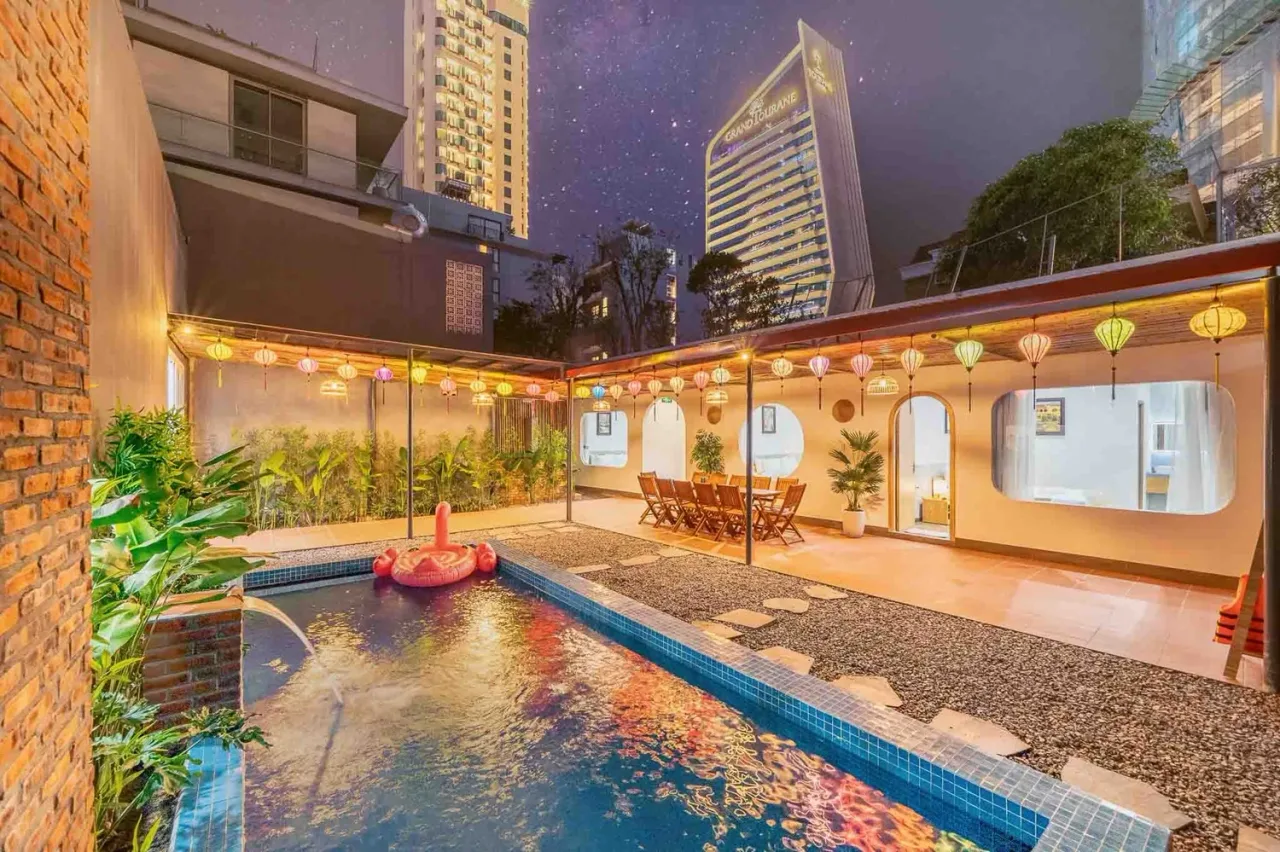
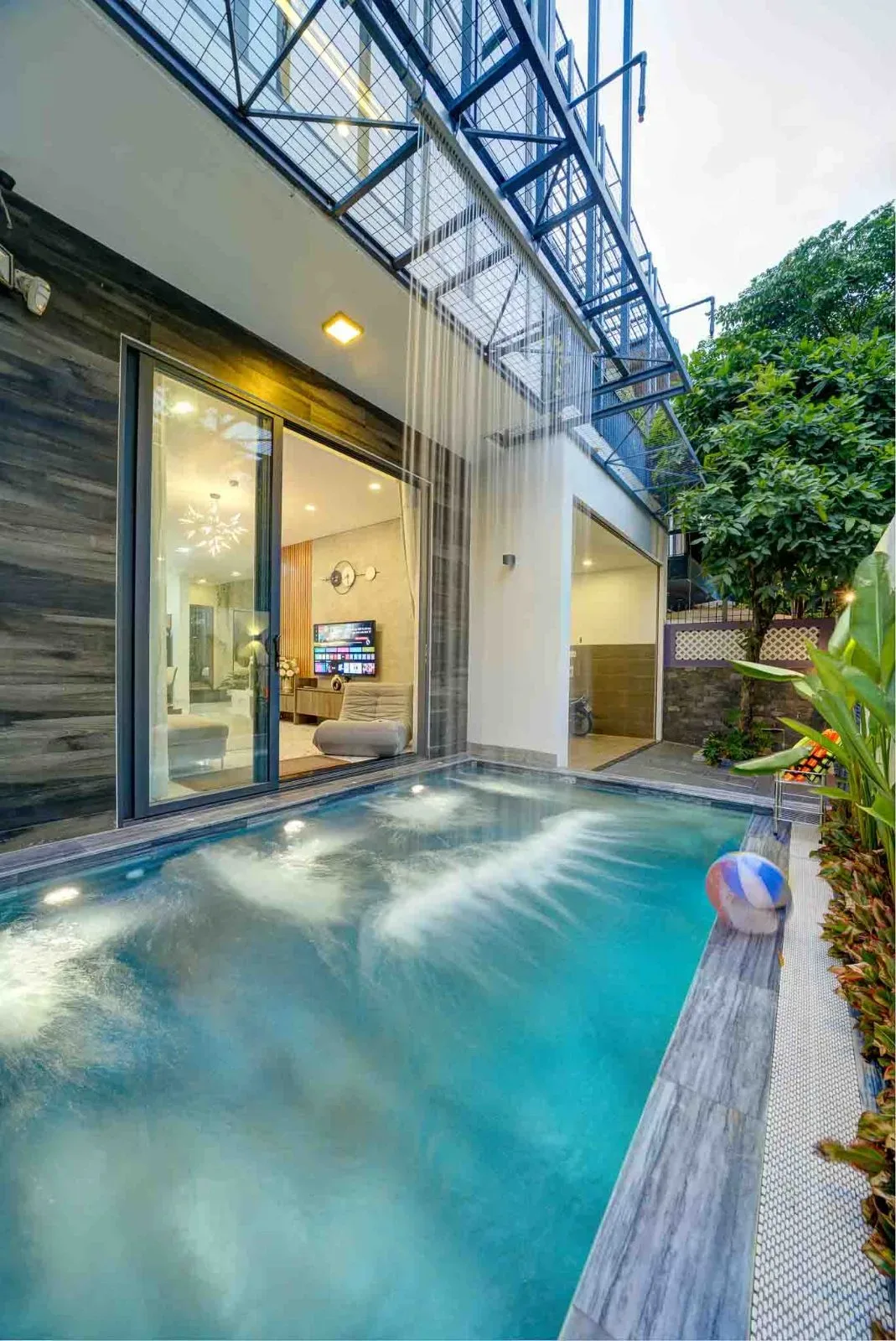
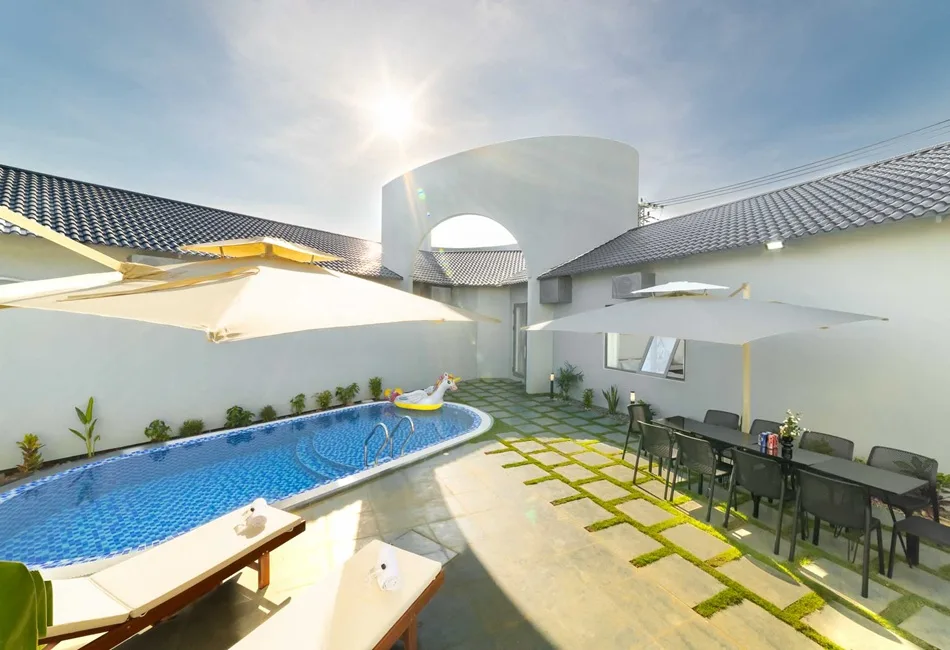
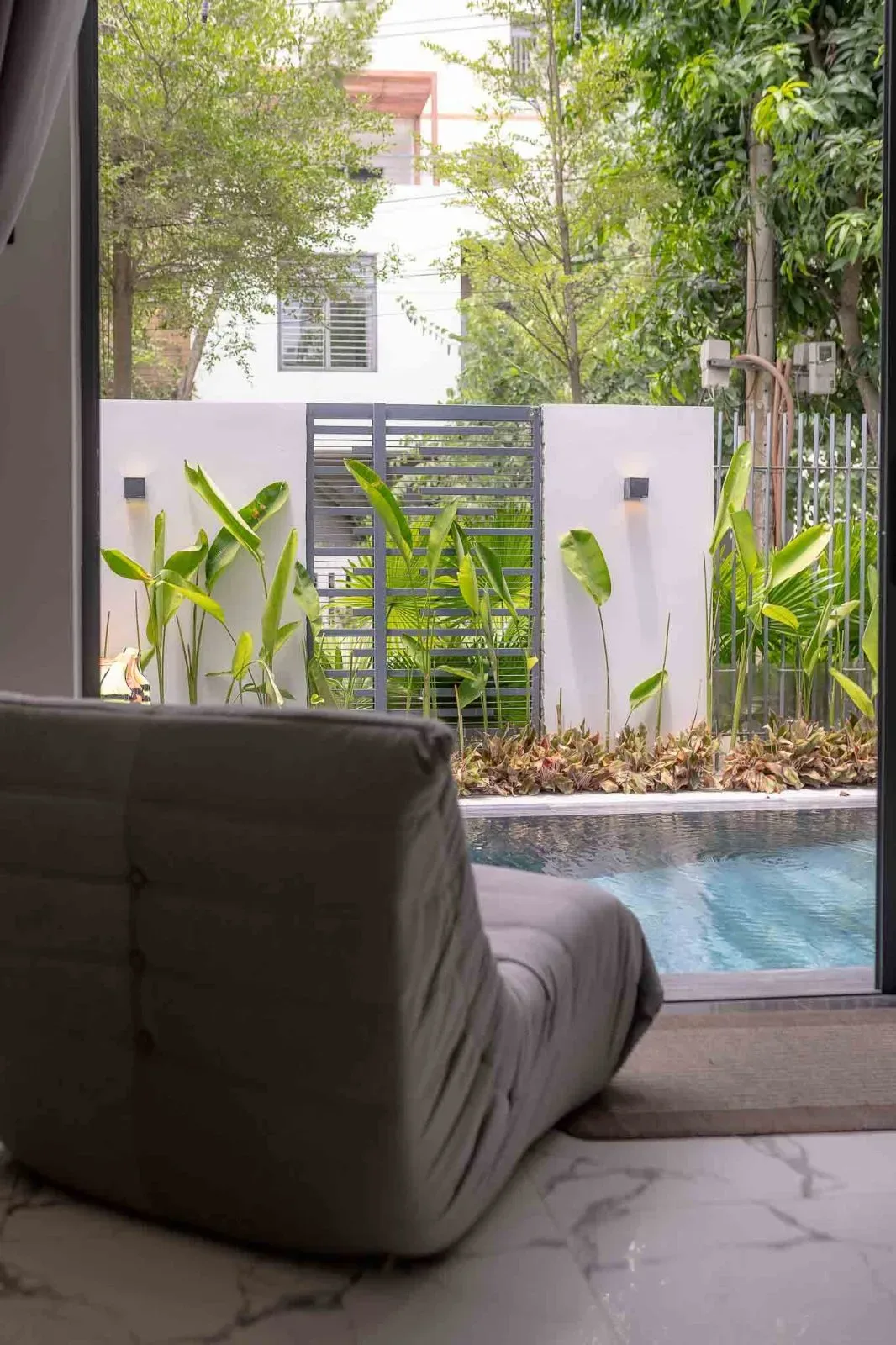
A pool depth of around 1.2 to 1.4 metres is typical for private villas in Da Nang - shallow enough for adults to stand comfortably, but still deep enough to require constant supervision with an infant or toddler nearby. Look for a pool with a gradual entry or a wide shallow step rather than a vertical drop from the edge. That small detail makes wading with a baby far less stressful.
If the villa description does not specify pool depth or entry style, ask before booking. A local team that manages the property directly can answer that question quickly rather than leaving you guessing from photos.
Blackout curtains and bedroom layout
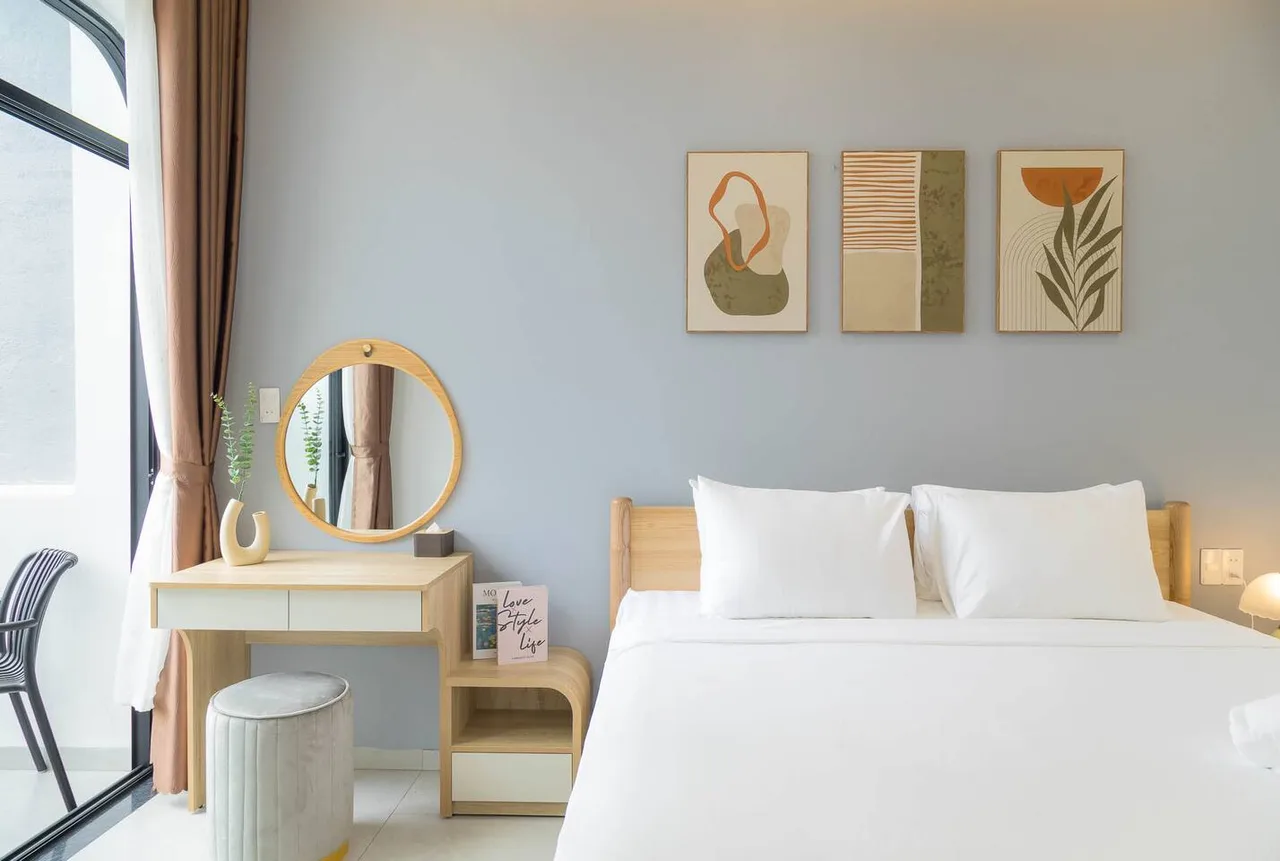
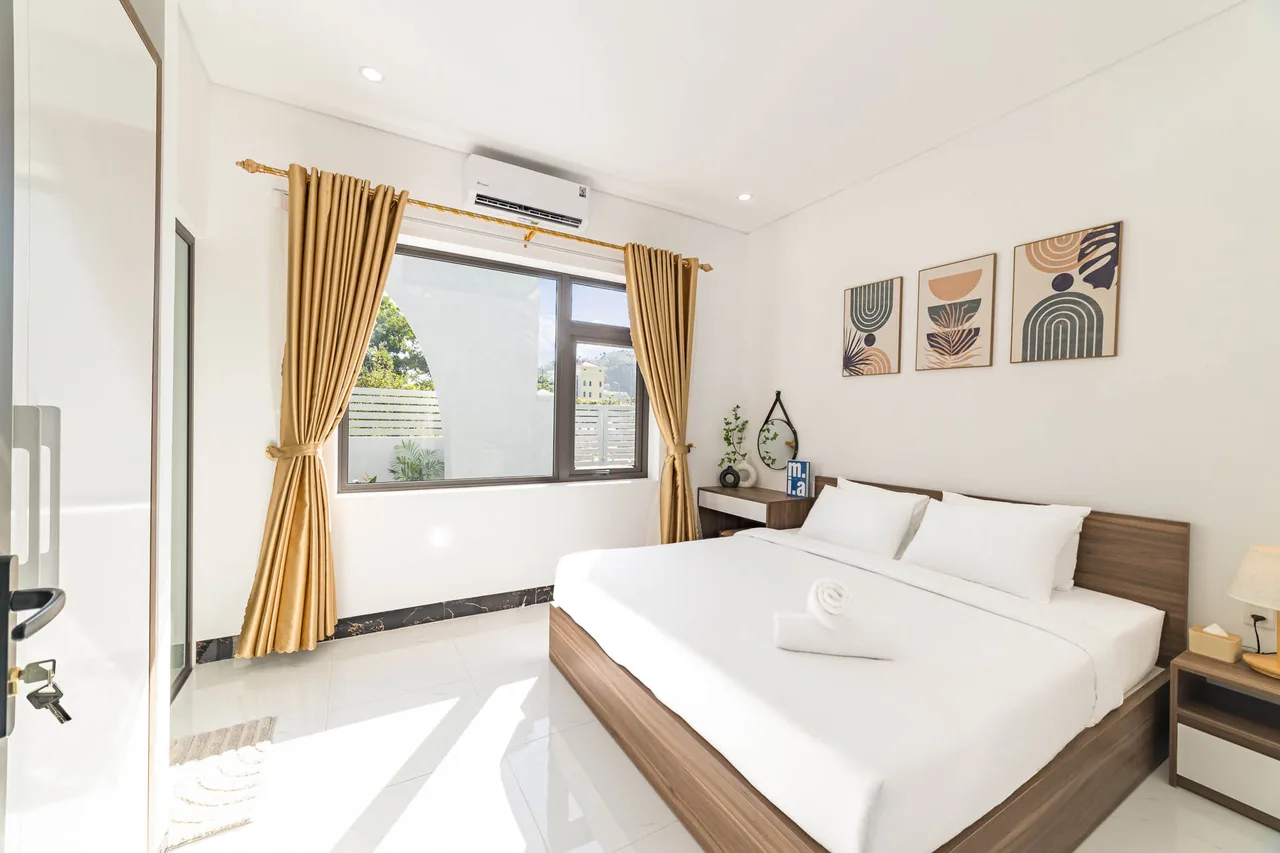
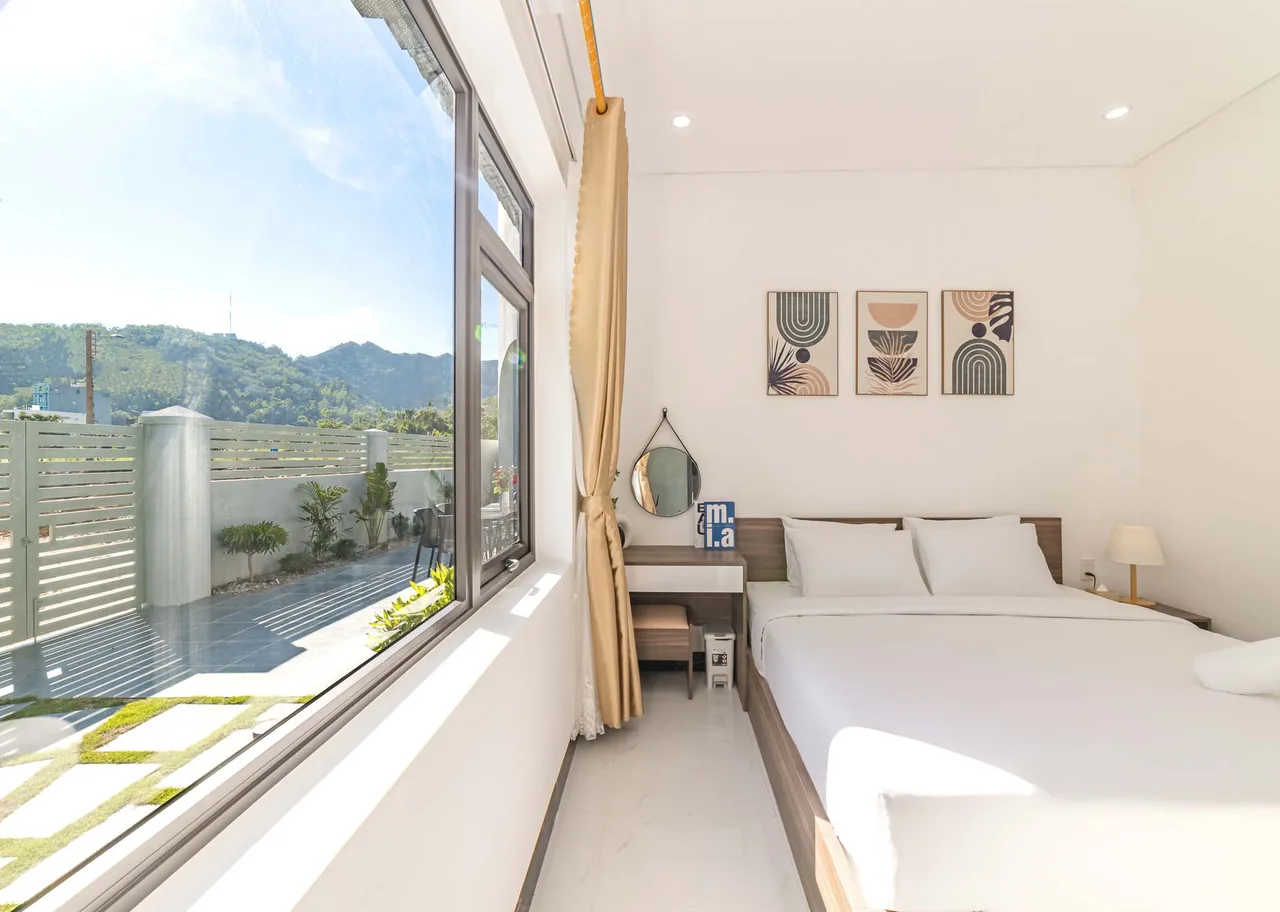
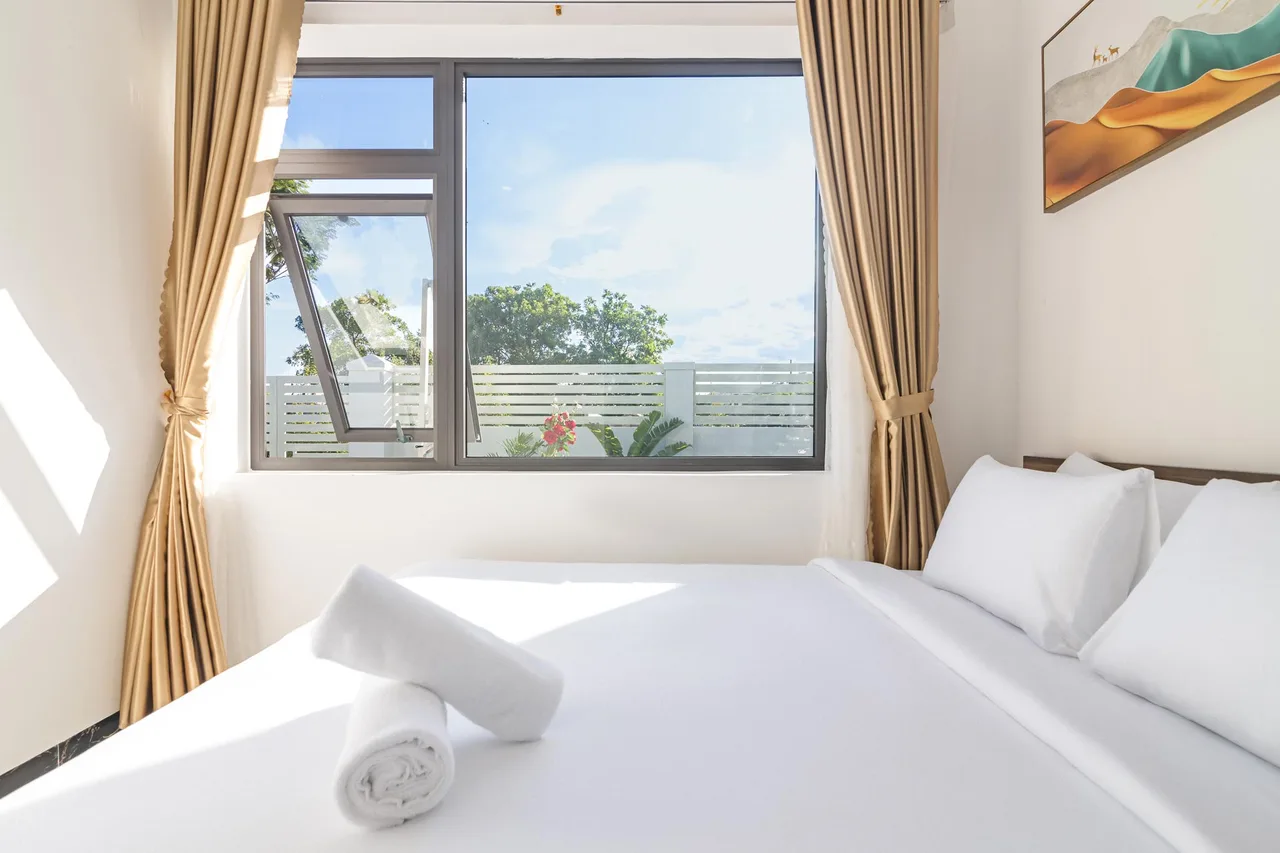
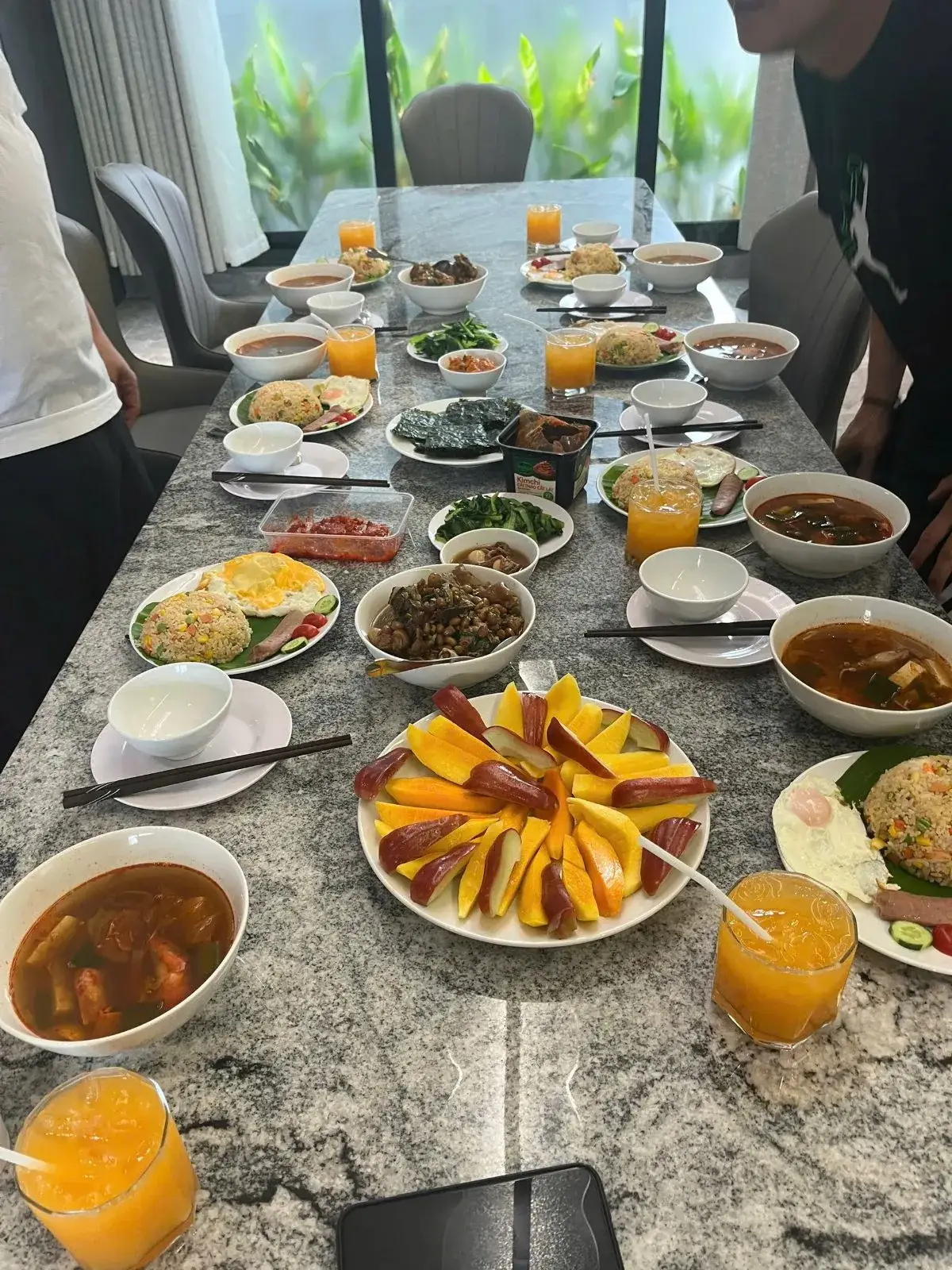
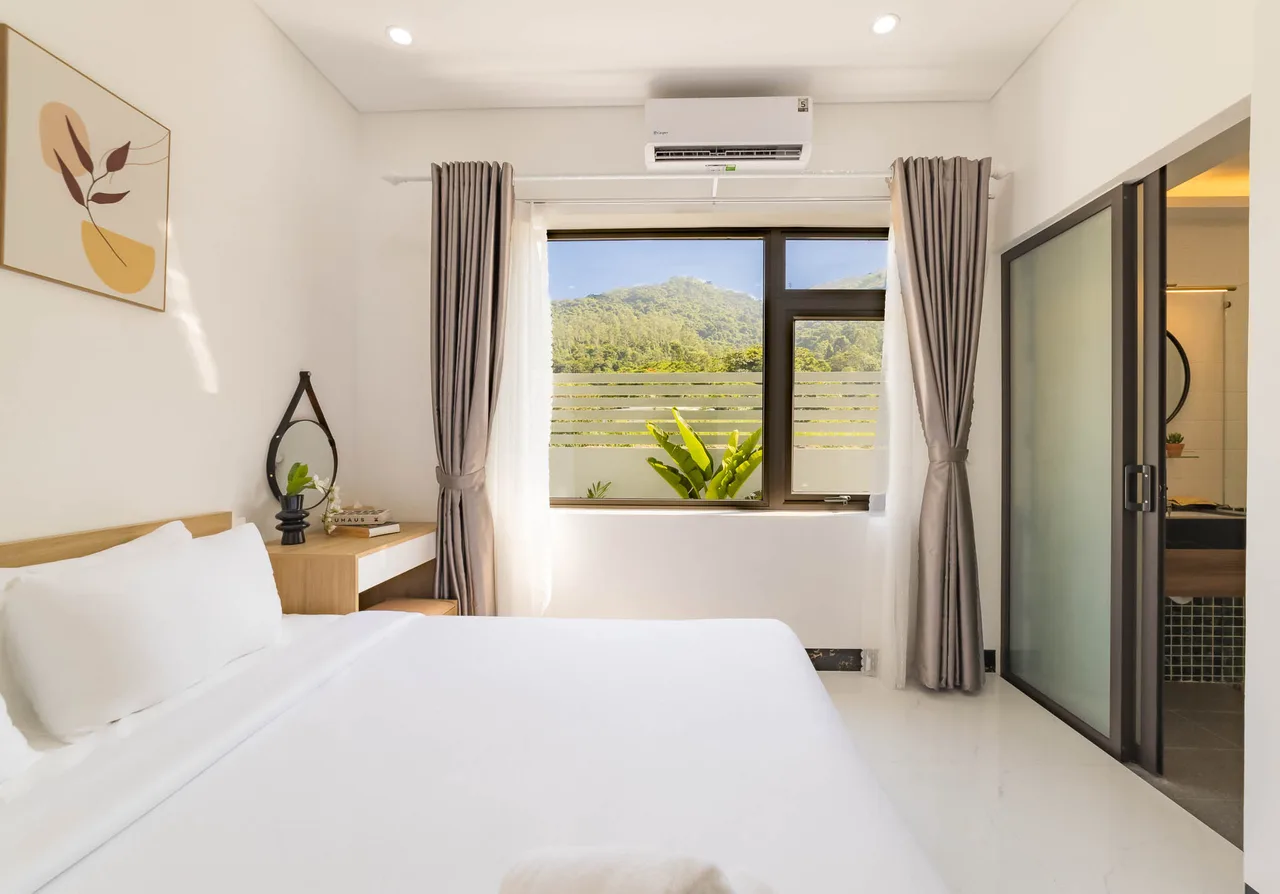
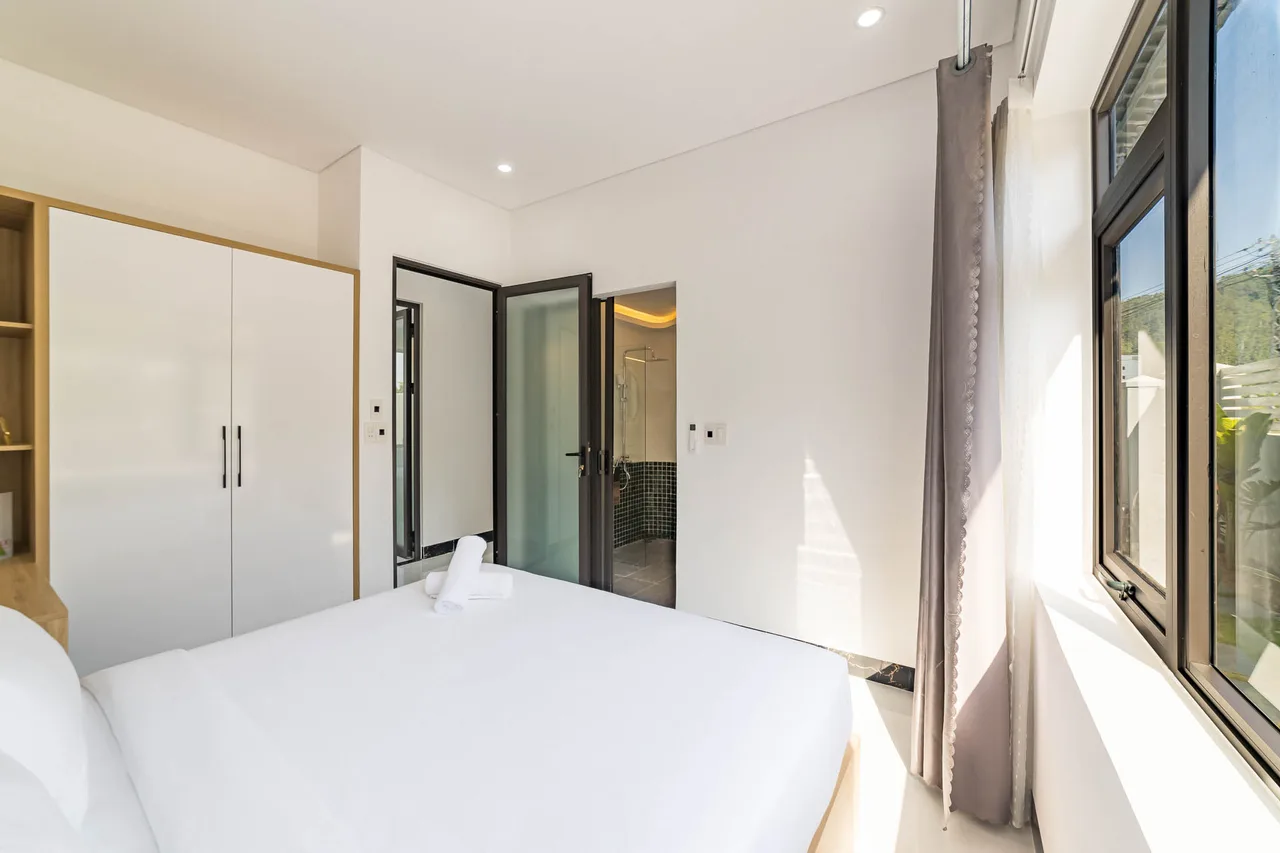
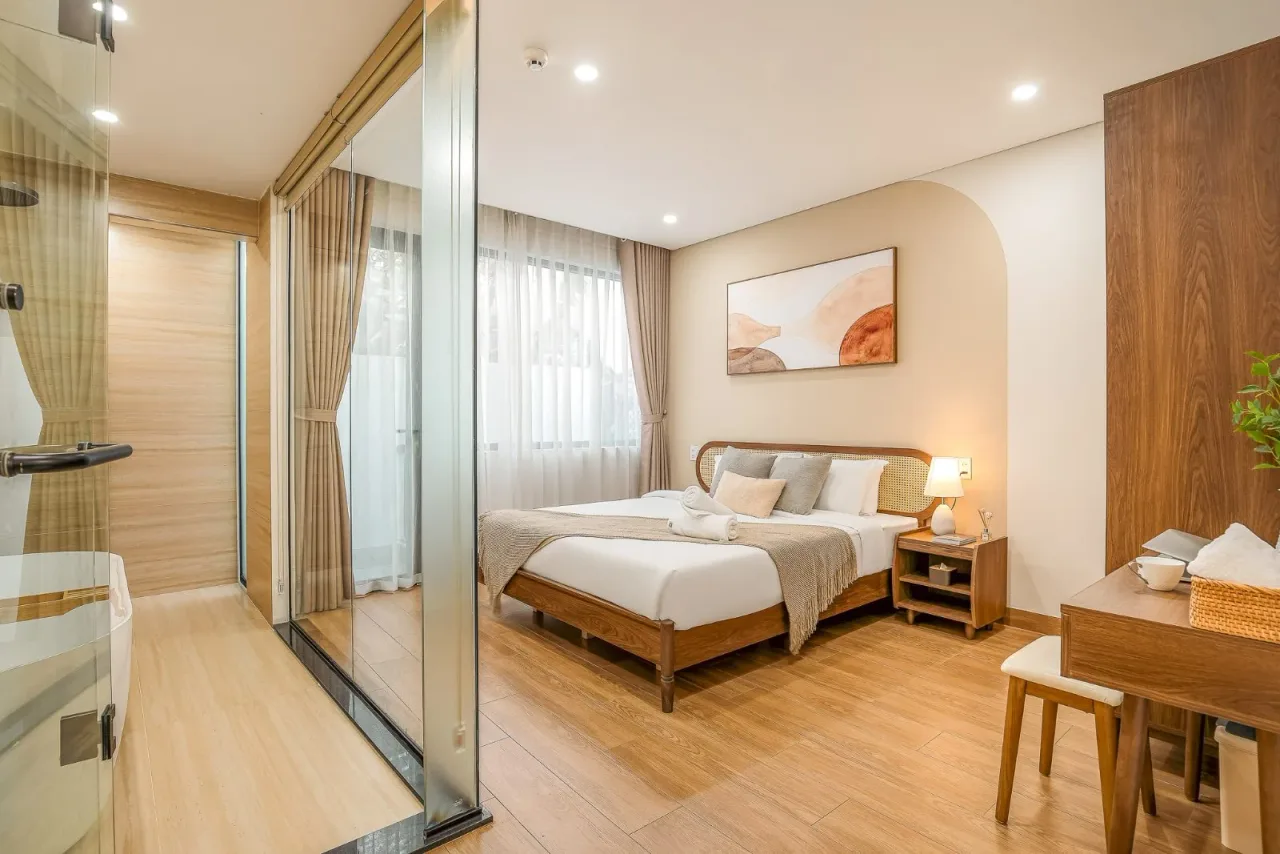
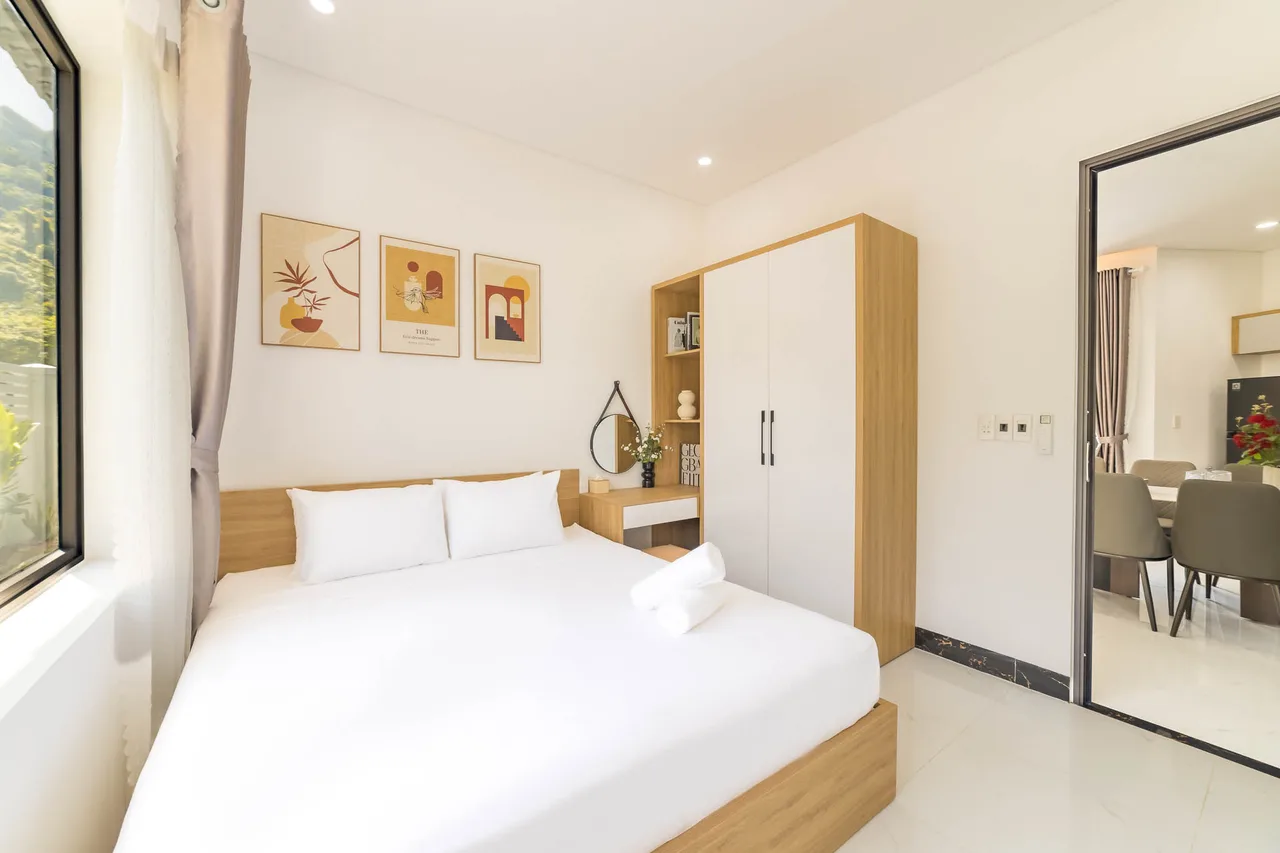
Da Nang mornings get bright early, and a baby who wakes at 5 a.m. because of light through thin curtains will throw off the whole day. Blackout curtains or solid blinds in the bedroom are not a luxury - they are a practical necessity for protecting nap schedules and early bedtimes.
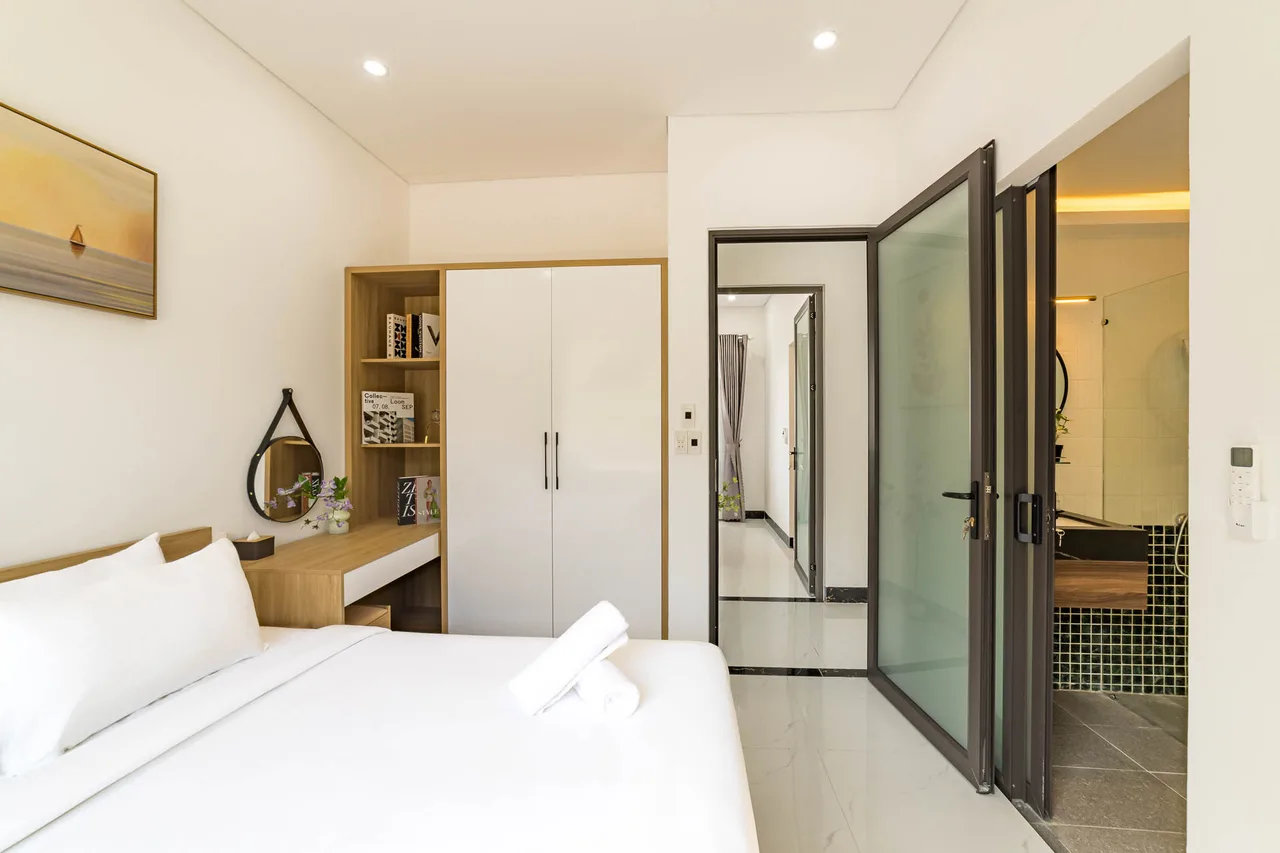
Single-storey villas are worth prioritising if you are travelling with an infant or with grandparents helping with childcare. One guest who stayed at the Ruze villa with three generations noted that the single-floor layout meant they could stop worrying about stairs entirely - a small thing that made a real difference to how relaxed everyone felt.
Kitchen access for bottle prep and purees
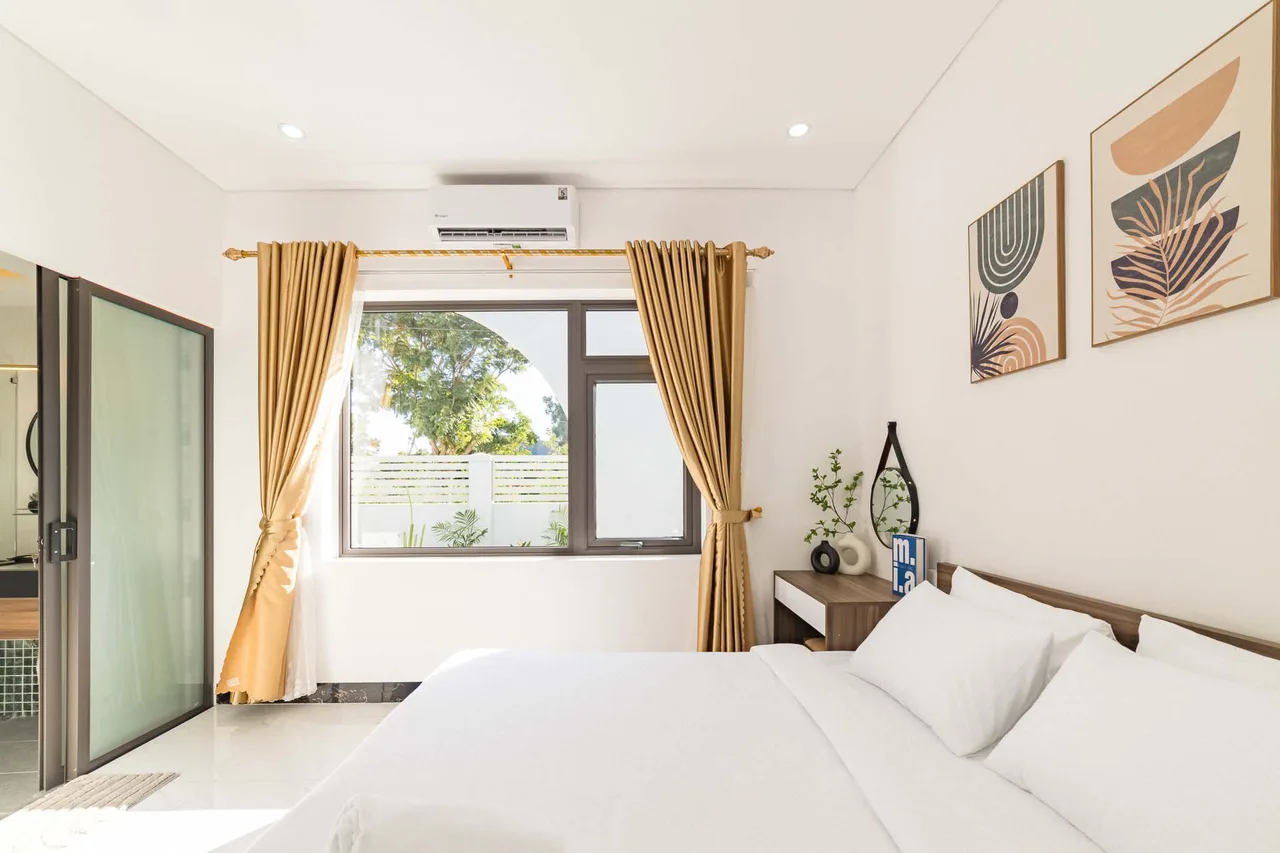
A fully equipped kitchen changes the rhythm of a trip with a baby. Being able to sterilise a bottle, warm formula, or blend a simple puree without leaving the property means you are not scrambling to find a café at 6 a.m. or rationing the last scoop of formula powder.
Check that the villa has a hob, a microwave or kettle, and enough counter space to work comfortably. The Kalma villa, for example, is described as having a kitchen equipped for big group dinners - that level of setup easily handles infant feeding needs.
Quiet surroundings
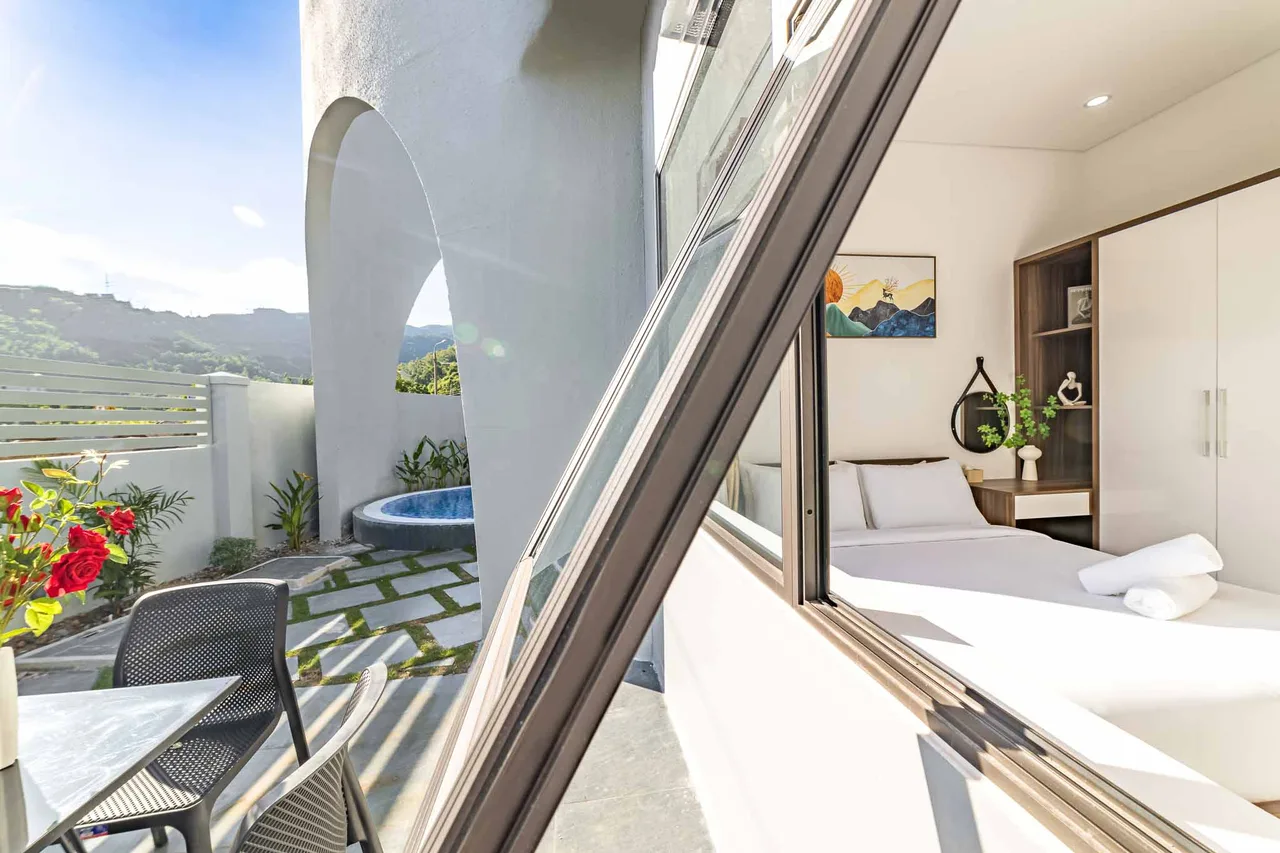
Nightlife streets and busy intersections are fine for adults but disruptive for infants with early bedtimes. When comparing villas, ask whether the property sits on a quiet residential lane or close to bars and restaurants. A villa with solid perimeter walls - like the arched walls at Ruze - adds an extra layer of acoustic and visual privacy that helps babies settle at night.
Pool: look for gradual entry or a wide shallow step, not a sheer edge drop
Bedroom: blackout curtains or solid blinds are essential for nap and bedtime routines
Layout: single-storey villas remove stair risk and make night feeds easier
Kitchen: a full hob, kettle, and counter space covers bottle prep and simple purees
Location: quiet surroundings and solid perimeter walls protect sleep schedules from street noise
If you are unsure which villa matches these criteria for your travel dates, the on-the-ground team at Querencia can point you to the right fit directly - no guesswork from a listing page alone.
 The Querencia Calma(6R6B)
Pacing Day Trips So Your Baby Actually Enjoys Them
The single most useful rule for day trips with an infant in Da Nang is this: leave early, return before noon. Morning air is noticeably cooler, crowds are thinner at popular spots, and your baby is typically at their most alert and settled before the midday heat builds. Plan to be back at the villa by 11:30 am or noon at the latest, so nap time happens in a cool, quiet room rather than a sweaty car.
Which Attractions Work Well with a Stroller

Hoi An Old Town is one of the most stroller-friendly destinations near Da Nang. The lanes are narrow in places, but the main walking streets are flat and paved, and early morning visits - before 9 am - mean you have space to move without being squeezed by tour groups. The coconut basket boat experience on the Thu Bon River is a short, low-movement activity that many babies find genuinely calming on the water.
Marble Mountains has uneven stone paths and steep stairs that make a stroller impractical for much of the site. If you want to visit, a carrier or structured baby wrap is a better choice than a pram. Keep the visit short and time it for the first hour after the site opens, when shade covers more of the paths.
Build the Day Around the Baby's Schedule - Not the Itinerary
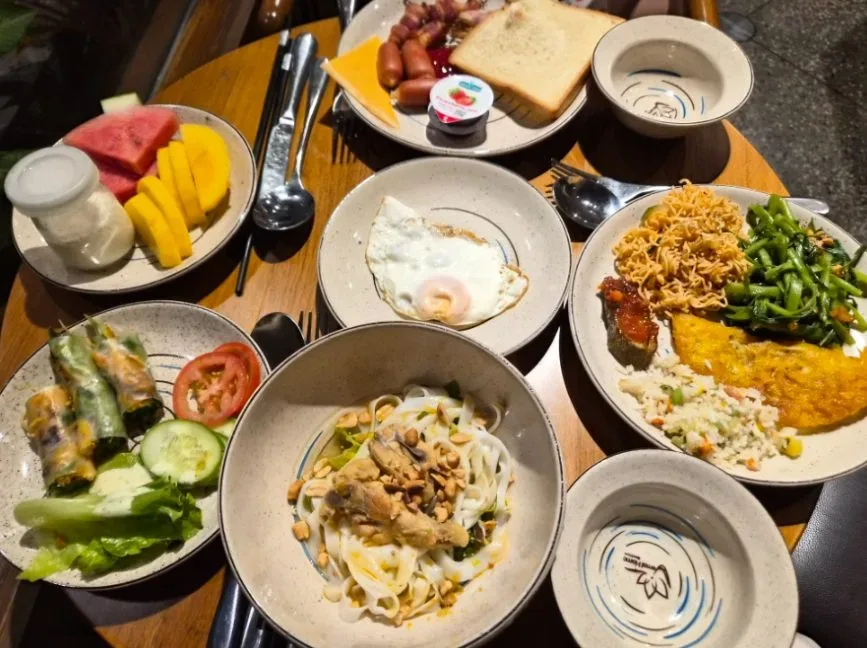
A realistic half-day structure for families with infants looks like this:
6:30 - 7:00 am - Morning feed and a short pool session at the villa while the air is cool.
7:30 - 8:00 am - Depart for the day's destination. Transfer times from most villa areas to Hoi An are roughly 30 to 45 minutes; confirm the exact time when you arrange your vehicle in advance.
8:00 - 10:30 am - Explore the attraction. Carry shade, a portable fan, and a full change of clothes.
11:00 am - Return to the villa. Lunch, feed, and a full nap in the air-conditioned room.
Afternoon - Villa time: pool, rest, or a quiet walk near the property once the heat eases after 4 pm.
What to Carry on Every Outing
 The Querencia Luz(6R6B)
Shade is the most important item. A compact clip-on stroller parasol or a wide-brim sun hat for the baby handles direct sun when you are between buildings. Bring more water than you think you need - both for the baby and for yourself, since dehydration affects your patience as much as your baby's mood.
Cooling cloth or small spray bottle - useful when you are waiting in a queue or sitting at an outdoor table.
Pre-made feeds or snacks - do not count on finding a quiet, clean spot to prepare a bottle on the road. Prepare at the villa and carry in an insulated bag.
A change of clothes for the baby and one for you - spills and sweating are both inevitable.
Lightweight carrier or wrap - for sites where a stroller is impractical, and for moments when the baby simply needs to be held close.
Off-Peak Travel - Fewer Crowds, More Space
If your dates fall outside the peak February to August window, the trade-off is worth understanding clearly. September and early October still see many sunny days; the rainy season proper - with heavy, persistent rain - is concentrated in October and November. Outside those two months, you are more likely to have a bright morning than a wet one, and popular attractions are noticeably quieter. Fewer crowds mean more room to maneuver a stroller, shorter waits, and a calmer atmosphere that benefits a baby as much as it does the adults.
Villa rates also tend to be lower in the shoulder months, and the local team can often be more flexible with timing when the area is less busy. If your baby's schedule is your main constraint, a quieter destination is genuinely easier to navigate than a peak-season one.
 The Querencia Luz(6R6B)
Planning Your Stay - One Team, One Plan
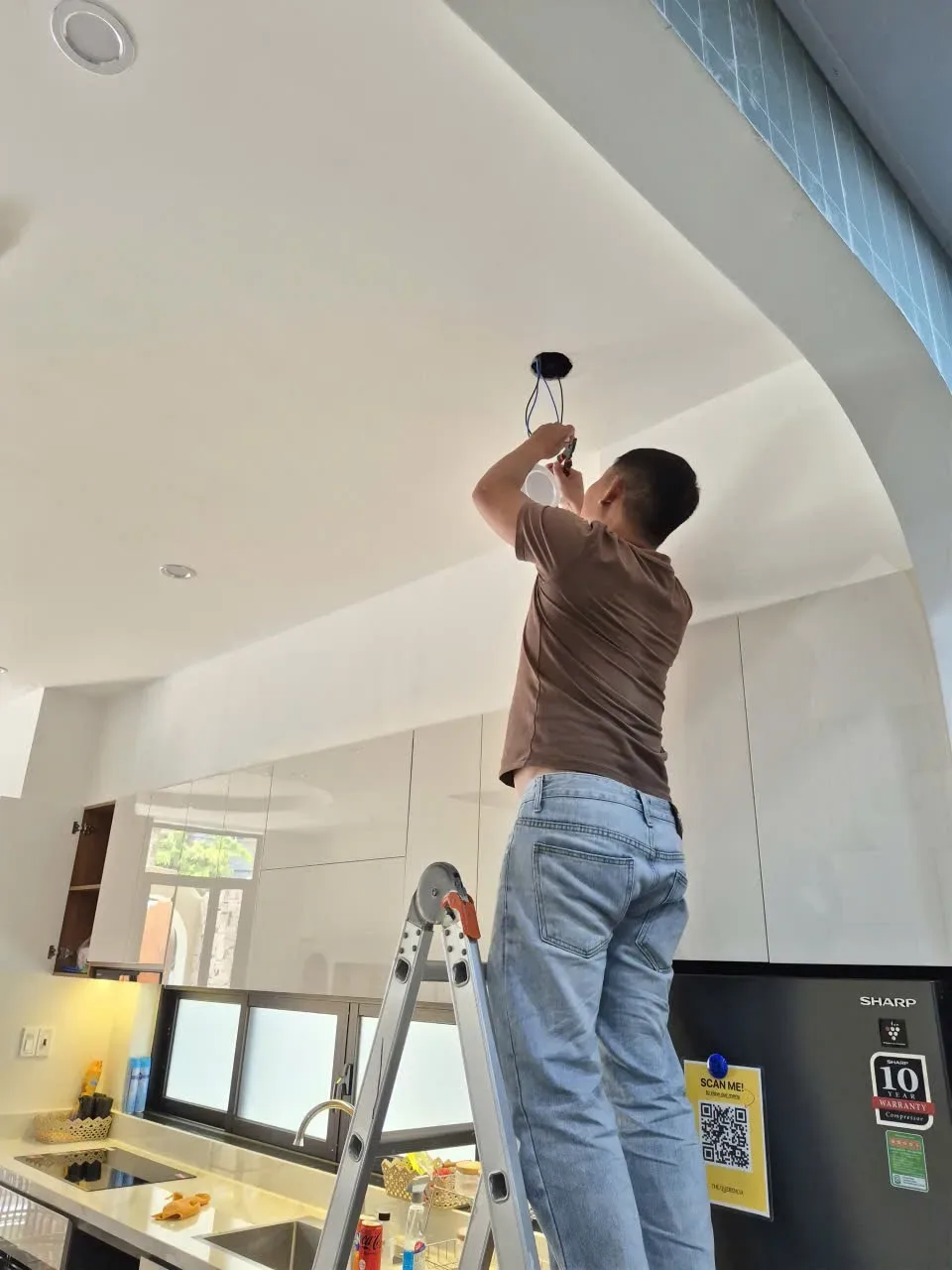
Traveling with an infant means every logistical gap costs you sleep - yours and the baby's. The part that tends to reassure families most about a Querencia stay is that the airport pickup, the villa, and any day trips are handled as one connected plan rather than three separate bookings you have to stitch together yourself.
Airport Arrival - No Scrambling at the Kerb
Airport pickup is included with the stay. A private vehicle meets you at Da Nang International Airport and takes you directly to your villa. Most villa areas are within 20 to 40 minutes of the airport, so a baby who fell asleep on the plane has a reasonable chance of staying asleep through the transfer. When you book, confirm whether a dedicated infant car seat is available - it is always worth asking in advance rather than assuming.
Getting Around During Your Stay
For families traveling in a group, a pre-booked private vehicle arranged through Querencia is more practical than splitting the party across multiple rides every time you want to go out. You keep the same driver, the same vehicle, and the same amount of boot space for a stroller, a nappy bag, and everything else a baby requires on the road. This matters most on days when you have a tired infant and a tight return window before the next nap.
 The Querencia Luz(6R6B)
Tours Fitted Around the Baby's Schedule
Day trips - such as a morning in Hoi An's Old Town or a coconut basket boat experience - can be built into the stay plan from the start. The advantage of planning them with the same team that manages your villa is that timing is flexible. If the baby had a rough night and a 9 a.m. departure is not realistic, there is a local team on the ground to adjust rather than a third-party operator who does not know your situation.
What to Confirm Before You Arrive
Car seat availability - ask when you book the transfer, not on the day.
Pool depth - pool specifications vary by villa; confirm the depth suits your child's age and confidence in water before you choose.
Kitchen setup - verify the villa has what you need for bottle prep: a kettle, clean worktop space, and a refrigerator.
Blackout curtains - worth a direct question if protecting nap schedules matters to you.
Tour timing - let the team know your baby's rough daily schedule so departures can be planned around it.
 The Querencia Luz(6R6B)
Ready to Check Dates?
The villas vary in layout, pool size, and neighborhood - some are closer to My Khe Beach, others are set in quieter residential streets that suit families who need a calm base. If you have a group size, a travel window, and a list of non-negotiables for the baby, share them when you enquire. The local team can point you to the villa that fits rather than leaving you to compare listings on your own.
Ask about availability and which villa suits your family's setup - contact details are in the site header.